
After9-Chat, Flirt, MeetUp
EXKLUSIVAPPSSocial
4.775.00 Reviews
- Version
- 0.0.5
- Installs
- 10.00K
- Age Rating
- Mature 17+
Screenshots
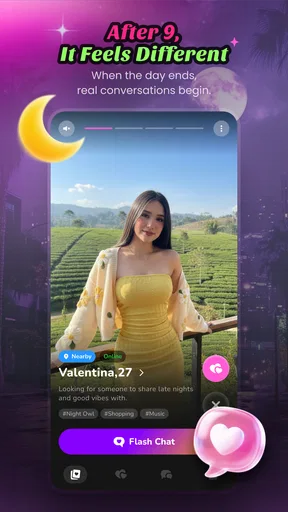
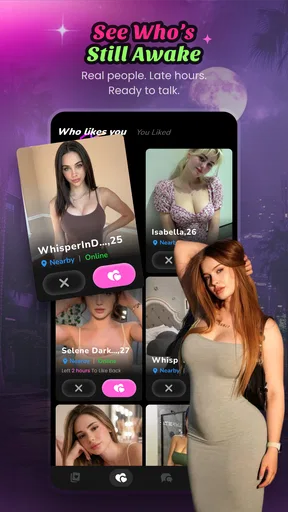

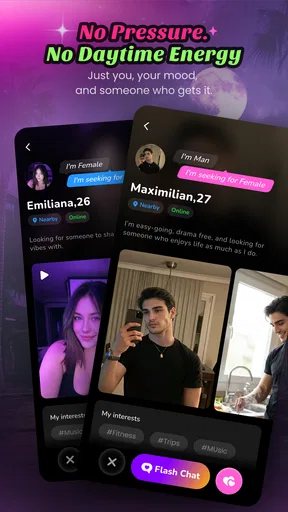
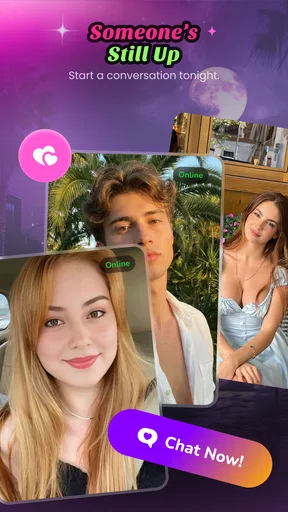
Our Review of After9-Chat, Flirt, MeetUp
 Analysis by Appyee
After9-Chat, Flirt, MeetUp is a social app from EXKLUSIVAPPS built around a simple idea: making conversation easier when the day is winding down. I approached it less like a replacement for every social network and more like a focused place for people who want to talk, flirt, or meet others during late hours. That narrower purpose gives it a distinct mood, but it also means the app will not suit everyone.
My first impression was that the app asks for a particular kind of user: someone comfortable with meeting people online, aware that social discovery always involves judgment, and willing to keep personal boundaries clear. The store summary, “Real people. Late hours. Ready to talk,” sets that tone without promising a complicated community system. It is listed as a free app, although optional purchases range from $1.99 to $39.99 per item, so I would treat the free download as a way to explore the experience rather than assume every useful interaction will remain free.
The app is aimed at mature users, with a 17+ content rating. That matters here because flirting and meeting strangers can move quickly from casual conversation into sensitive territory. I would not recommend installing it for a teenager, and I would not use the age label as a substitute for personal caution. A mature rating describes the intended audience; it does not automatically tell me that every person I encounter is trustworthy.
How After9 fits into late-night social discovery
What makes After9-Chat, Flirt, MeetUp different from a general social network is its concentration on one social moment. Large platforms are usually filled with public posts, family updates, entertainment, group discussions, and algorithmic distractions. A conventional dating service may put more emphasis on profiles, matching, and relationship goals. After9 sits closer to spontaneous conversation, where the appeal is the possibility of finding someone available to chat when ordinary social channels feel quiet.
That focus can be useful after work, during a lonely evening, or when I want a low-pressure conversation instead of scrolling through a crowded feed. It can also create a more direct atmosphere than a broad social app. The trade-off is that a late-night setting may encourage faster decisions. Someone who seems friendly in a short exchange is still a stranger, and an appealing conversation should not push me into sharing private details or arranging an in-person meeting before I am ready.
The app has a current version of 0.0.5, which suggests an early-stage product experience. I see that as both an opportunity and a reason to keep expectations measured. A newer social app can feel less cluttered and more focused, but it may also have rough edges, a smaller pool of active people, or controls that are still developing. Its public traction is modest but meaningful: it has passed ten thousand installs and carries a 4.7 average from around 1.3 thousand ratings. Those figures indicate encouraging interest, yet they do not guarantee that I will find a lively conversation at the exact hour I open it.
What I would check before starting a conversation
My approach with this app is deliberately slower than the mood might suggest. I would first look at what the profile visibly reveals, whether the person communicates clearly, and whether the conversation stays respectful when I set a small boundary. That last point is more informative than a polished photo or a charming opening line. A person who accepts “I would rather keep this in the app for now” gives me a better reason to continue than someone who immediately asks for a phone number.
I would also avoid treating the app as a verification service. The available facts identify the developer as EXKLUSIVAPPS, the app’s social purpose, its mature audience, and its pricing structure. They do not give me a reason to assume that every profile is authentic or that every conversation is safe. I therefore judge trust through what I can actually see: the choices presented during use, the account controls available to me, and how easily I can stop an interaction.
The most important trust habit is to separate a pleasant conversation from proof of identity. That sounds obvious, but late-night social apps make the distinction easy to forget. I would not send an address, workplace details, travel plans, financial information, intimate images, or copies of identification simply because a chat feels emotionally close. If a conversation becomes pressuring, secretive, or urgent, I would end it rather than negotiate with the pressure.
Controls that matter more than visual polish
When I assess a social app, I pay attention to controls before I worry about decoration. Can I decide how much of myself to reveal? Can I leave a conversation without an argument? Can I manage the account without needing to continue a chat? Can I recognize when an interaction may cost money? These questions are more useful than judging the app by its promise of meeting “real people,” because trust is built through visible choices and practical exits.
For After9, I would review the account and conversation screens carefully on first use. I would look for obvious ways to edit or remove personal profile information, adjust visibility where the app allows it, and stop contact that no longer feels comfortable. I would also note whether paid options are clearly distinguished from ordinary conversation. Since in-app items can cost as much as $39.99, I would avoid tapping purchase prompts casually and would confirm what an item does before approving anything.
This is one area where the app’s early version matters. I would not assume that a control exists merely because other social apps offer it. I would inspect the actual menus and prompts, read the wording around account actions, and keep my expectations tied to what appears on my device. If a setting is difficult to find, that is not a minor inconvenience in a social product; it affects how much agency I have when a conversation turns uncomfortable.
I also prefer to make a clean distinction between deleting a chat, blocking a person, and closing an account. Those actions can have very different consequences. Before using any of them, I would read the confirmation screen instead of tapping through it. If the app presents a report or block control, I would use it for harassment, threats, scams, or repeated unwanted contact rather than trying to resolve serious behavior through a long private debate.
Data-sensitive moments deserve extra attention
The riskiest part of a social app is not always the sign-up screen. Often it is the gradual accumulation of details in conversation. A stranger may learn my routine through harmless-sounding questions: when I finish work, which neighborhood I visit, whether I live alone, or when I am traveling. Each answer can seem insignificant, but together they create a much clearer picture of my life.
I would keep my early profile deliberately general. A first name or nickname is more comfortable for me than a full legal identity, and a broad area is safer than a precise location. I would avoid using a profile photo that also appears on professional pages or public accounts if I wanted to reduce easy cross-searching. These are not claims about what After9 collects; they are practical choices I can make before handing more context to a new contact.
Photos deserve the same care. Background details can reveal a home entrance, a street sign, a school, a workplace badge, or a regular café. Before uploading anything, I would check what appears behind me and whether the image exposes information I would not say directly in chat. I would also remember that a disappearing or private-feeling exchange does not eliminate the possibility of screenshots or redistribution. I would share only material I could tolerate becoming public.
Location is especially sensitive when an app is designed around meeting people. I would prefer to discuss a public area rather than provide an exact address, and I would arrange my own transport instead of depending on a new contact. For a first meeting, I would tell a trusted person where I am going, set a check-in time, and choose a busy venue. If the other person objects to those precautions, I would take that reaction seriously.
Payment is another data-sensitive moment. The free price makes trying the app less financially demanding at the start, but optional purchases change the decision once I begin interacting. I would check whether a prompt is for a one-time item or something that could lead to repeated charges, and I would keep purchase approval under my control. The listed range from $1.99 to $39.99 per item is wide enough that impulse spending deserves attention, particularly during an emotionally engaging conversation.
A realistic evening with the app
Imagine opening After9 after a long shift, when friends are offline and I want a conversation without committing to a formal date. I might browse cautiously, start with a neutral question, and spend the first exchange learning whether the person can hold a normal conversation. I would not begin by explaining where I work, where I live, or why I am awake. If the chat stays relaxed, I can decide later whether it deserves more time.
If the person quickly asks me to move to another messenger, sends a payment request, or insists on meeting immediately, I would treat that as a reason to stop. The app’s purpose may encourage fast connections, but it does not require fast trust. If the exchange remains respectful, I might continue inside the app for several conversations before considering a public meeting. This workflow keeps the social benefit while reducing the pressure to make a high-stakes decision during a lonely moment.
For someone who works unusual hours, that late availability could be the strongest reason to try the app. Night-shift workers, travelers, and people whose schedules do not match their friends’ routines may appreciate a social space oriented toward a different part of the day. For someone seeking a carefully structured relationship search, however, a more established dating service with clearer matching goals may be a better fit. For casual public discussion, a general community platform may offer more context and broader moderation tools.
Who should use it, and who should skip it
I think After9 is best for adults who want direct social discovery and are comfortable evaluating conversations one by one. It may suit someone who dislikes the noise of a full social network and prefers a narrower environment for chatting or flirting. It can also work for a user who understands that the app is a starting point, not a guarantee of friendship, romance, identity, or safety.
I would skip it if I am looking for a private journal, a professional networking space, or a platform where every interaction is tied to people I already know. I would also skip it if I tend to spend impulsively when conversations become exciting, or if I find it difficult to say no when someone asks for personal information. The mature rating and social purpose make self-protection part of the normal user experience, not an optional extra.
People who need strong certainty before talking to anyone online may be more comfortable with services that make identity checks, detailed profiles, or relationship intentions central to the experience. Those tools can reduce some uncertainty, although they cannot remove it entirely. After9’s appeal is its conversational immediacy, and immediacy is precisely what cautious users should balance with slower decisions.
My verdict after weighing trust and control
I see After9 as an interesting early social app with a clear late-hours identity rather than a universal answer to online connection. Its free entry point makes experimentation straightforward, while the mature audience and optional purchases mean I would use it with firm boundaries from the first session. The strong average rating and growing install count are encouraging signs of interest, but I would still judge the app by the quality of actual conversations and the clarity of its controls on my device.
My recommendation is cautious but positive for adults who want spontaneous chat and understand the responsibilities that come with meeting strangers online. I would keep my profile restrained, inspect account and purchase choices carefully, avoid moving sensitive conversations off-platform too quickly, and arrange any meeting in a public place with someone else informed. If those habits feel natural to you, After9 may provide a useful late-night social outlet.
If you want a highly structured dating process, a broad public community, or stronger certainty before contact, another category of app may serve you better. I would not install this one expecting the app itself to make trust decisions for me. I would install it only with the understanding that user agency is the real safety feature: I decide what to reveal, what to pay for, when to continue, and when to leave.
EXKLUSIVAPPS has created a focused concept in version 0.0.5, and I am interested to see how that concept develops. For now, the experience is most convincing when treated as a doorway to conversation, not as evidence that a stranger is genuine. Used with patience and clear limits, it can be worth exploring; used impulsively, its late-night atmosphere may encourage choices I would rather reconsider in daylight.
Verdict
Strengths of After9-Chat, Flirt, MeetUp
- Focused on meeting people for casual chats and local connections.
- Simple profile browsing makes discovering potential matches quick.
- Useful for users seeking social interaction beyond traditional dating apps.
- Chat-based approach encourages conversations before arranging a meetup.
- Available on mobile for convenient communication while on the go.
Limitations of After9-Chat, Flirt, MeetUp
- The quality of matches may vary significantly by location.
- Some features may require registration or additional personal information.
- Profiles with limited details can make genuine intentions difficult to judge.
- Meeting strangers in person requires careful planning and safety precautions.
- Activity levels may be low outside larger cities or peak hours.
Similar Picks in This Category
View All
Meta Platforms, Inc.4.6

Instagram4.0

Likee-Live, Chat & Party Games
Likeme Pte. Ltd.4.4

Facebook Lite
Meta Platforms, Inc.4.5

TikTok - Videos, Shop & LIVE
TikTok Pte. Ltd.4.0

Moj: Free Short Drama & Reels
ShareChat4.1
Frequently Asked Questions
What is After9-Chat, Flirt, MeetUp, and who is it designed for?
After9-Chat, Flirt, MeetUp is a social and dating-style app focused on helping adults discover new people, start conversations, flirt, and potentially arrange meetups. From the available features, it appears aimed at users who want casual social interaction as well as more meaningful connections. Before downloading, check the current age requirement, supported countries, and whether the community in your area is active enough to provide useful matches.
How does matching and chatting work in After9-Chat, Flirt, MeetUp?
The app generally allows users to create a personal profile, browse or discover other members, and interact through chat or similar communication tools. Depending on the version and your location, some actions may require a mutual interest before messaging, while others may be available through paid features. New users should review the app’s permissions, messaging rules, and subscription details so they understand which communication options are free and which may incur charges.
Is After9-Chat, Flirt, MeetUp safe and suitable for meeting people in person?
As with any dating or social discovery platform, safety depends on both the app’s moderation systems and your own decisions. Avoid sharing your home address, financial information, passwords, or private documents, and be cautious of profiles that quickly request money or pressure you to move off the platform. If you arrange a meetup, choose a busy public location, tell someone you trust, use your own transportation, and leave immediately if anything feels uncomfortable.
Does After9-Chat, Flirt, MeetUp cost money, and are there in-app purchases?
You may be able to download and create an account without paying, but social and dating apps commonly place certain features behind subscriptions, credits, or other in-app purchases. These can include unlimited messaging, profile visibility, advanced search, virtual gifts, or seeing additional interactions. Before confirming payment, carefully read the price, billing period, renewal terms, and cancellation instructions shown in the app store and inside the application.
What information and permissions are needed to use After9-Chat, Flirt, MeetUp?
A profile may require basic details such as an email address or phone number, age, location, photos, and personal preferences. Location access can help show nearby members or meetups, while camera and photo permissions may be needed for profile images and messages. Only grant permissions that make sense for the features you use, review the privacy policy, and remember that anything added to a public profile may be visible to other users.
